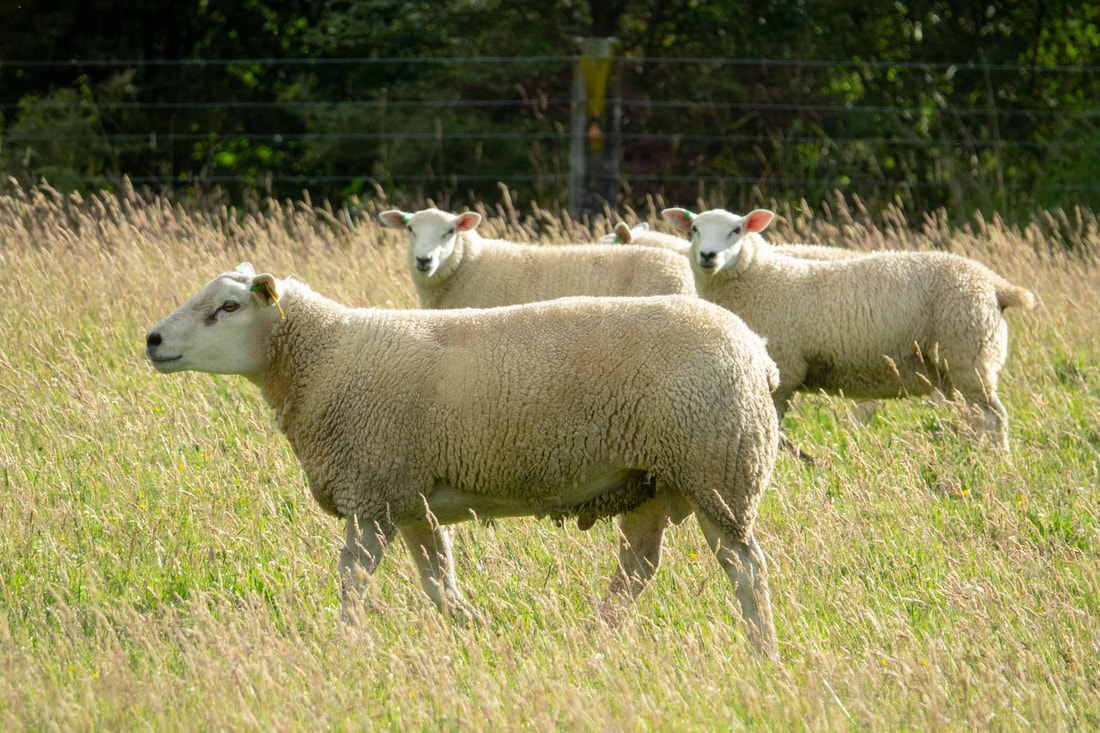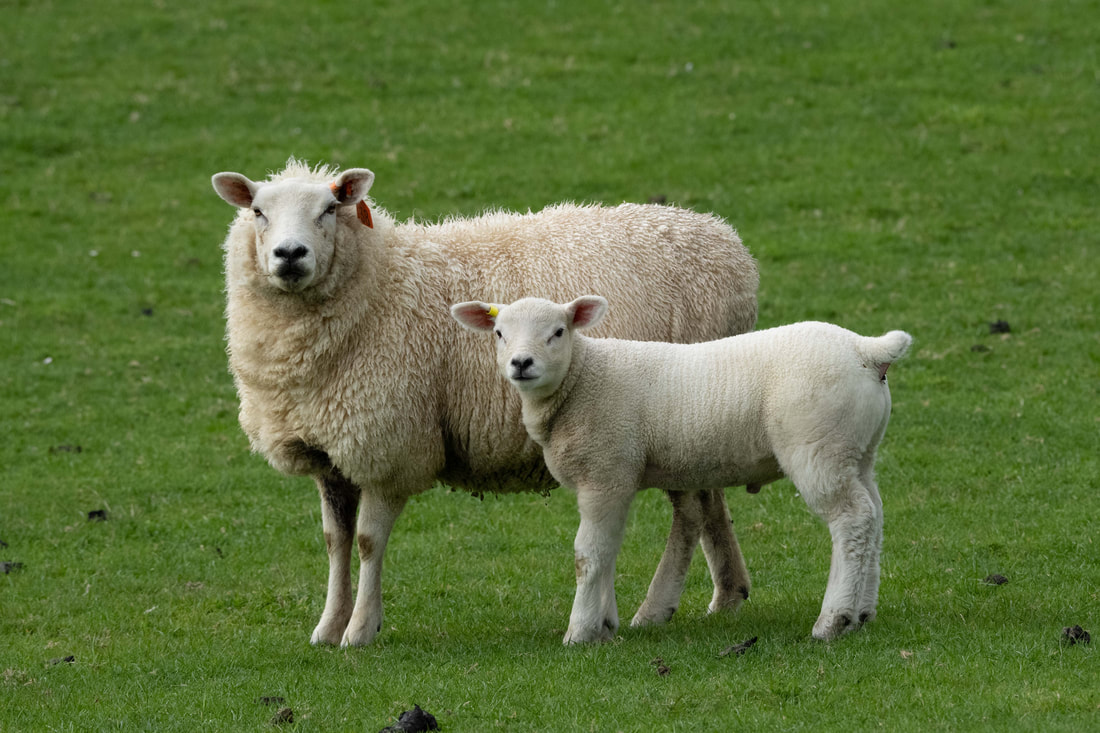
Photo: Blackdale 161/17, son of Vorn Yardstick, the base of our UK breeding line
ABOUT TEXEL SHEEP
|
• Texels originated from the Texel Island, near Holland. • They are the leading breed of sheep in Europe • Apparently the fastest growing breed in Ireland and the UK. • Texels were first introduced into the farming community of New Zealand in 1991, after being released from Quarantine. 
Lamb born Sept 2021 out of Highland 25/19. His live weight was 48 kilos. He was killed 22/12/21 for Christmas as he had a big black spot on his back. Dead weight the following day, 22kgs. Biggest eye muscle Steve has seen.
|
In Spring of 1992 our first Texel-cross lambs were born. It had been a particularly cold winter & Spring wasn’t much better. We had some very heavy snowfalls. We could not believe how quickly the lambs got on to their feet, despite the freezing conditions. Texels are renowned for being hardy, and this particular spring was a real test for their survivability. 
AI ram lamb Highland 1/21 out of Handbank Aidan. Birth weight 6.4 kgs. Free lambing - unassisted. Born 23/8/21
|
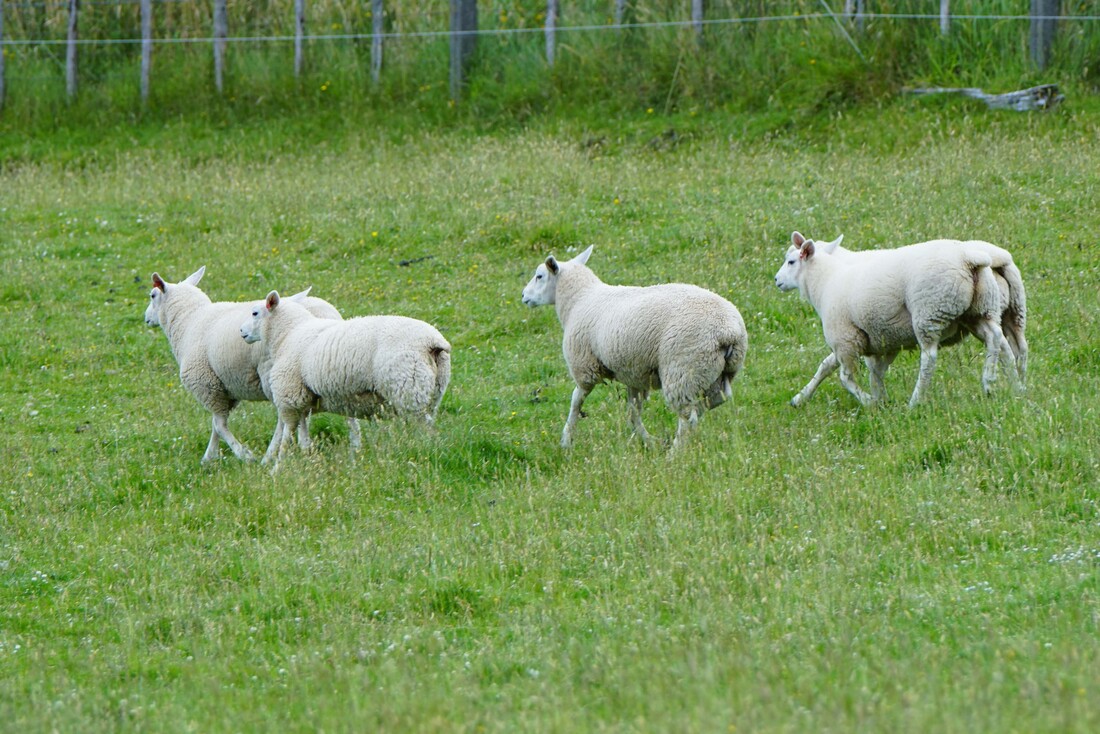
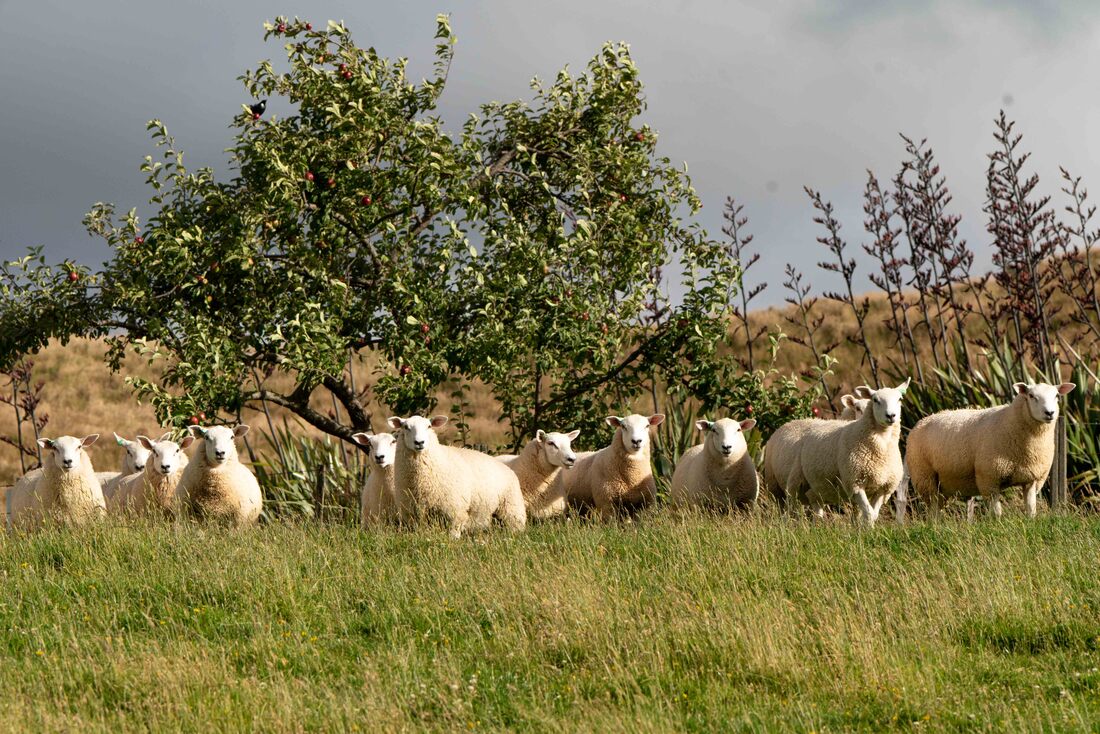
What do Texels look like? • They are very muscular sheep, with big hind quarters. • They are not a big framed or long sheep like the traditional NZ sheep. • They have small, wool-free white heads, and no wool on their legs. • Their wool is white and springy (bulky), springing back when it is squashed. • It is therefore particularly suitable for the Futon market in Asia and excellent for top-quality carpet. •The meat is lean, tender, succulent and fine-grained with very little cooking smell. In fact it cooks 30% quicker than traditional lamb. •Texel lamb consistently dominates the Glammy Awards; a competition to find the most tender tasty lamb in New Zealand 
Mother with ewe-lamb AI twins born Sept 2022 out of Vorn Aberystwyth. The lamb on the right with the "dirty" fleece has been rubbing on a burnt log
|